On a cold January morning in Massachusetts, Lisa stood at the front of her eighth-grade classroom, staring at twenty-three faces glowing blue from Chromebook screens. Half her students were working ahead, a few were quietly stuck, and one was clearly watching something that had nothing to do with the American Revolution. Ten years ago, she would have taken the device away. In 2025, she paused, walked over, asked a question instead of giving a warning, and turned the distraction into a discussion. That moment captured what teaching looks like today. Success is no longer about controlling a room. It’s about navigating complexity with skill.
Teaching in the United States has changed dramatically. Standards are higher, classrooms are more diverse, technology is everywhere, and teachers are expected to be educators, mentors, and emotional anchors all at once. The teachers who thrive are not necessarily the loudest or strictest, but the most adaptable. Certain skills now separate those who merely survive from those who genuinely succeed.
The ability to build human connection in a digital age
In a country where students can access almost any information instantly, the most valuable thing a teacher brings is not knowledge, but presence. Successful teachers today know how to make students feel seen.
This doesn’t mean being overly friendly or trying to mimic teenage slang. It means listening carefully, remembering details, and responding with empathy. In American classrooms, where students come from different cultural, racial, and economic backgrounds, connection builds trust. And without trust, learning rarely happens.
A high school English teacher in Chicago once said that the most powerful tool in her classroom wasn’t her lesson plan but her ability to notice when a normally engaged student suddenly went quiet. That awareness, that human sensitivity, is a skill — and it matters more now than ever.
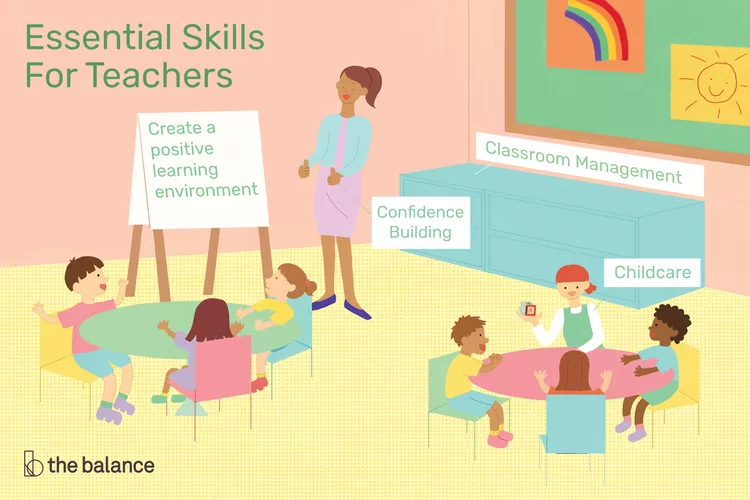
Classroom management through influence, not authority
Traditional classroom control — strict rules, raised voices, fear of punishment — is increasingly ineffective. Students today are more vocal, more aware of their rights, and less responsive to blind authority. Successful teachers manage classrooms through clarity and consistency rather than intimidation.
In the U.S. education system, where student behavior policies are closely regulated and parental involvement is high, teachers who rely on power struggles often burn out. The ones who succeed are those who set clear expectations, explain the why behind rules, and treat students as collaborators in the learning process.
This doesn’t mean being lenient. It means being fair, predictable, and calm. Students respond strongly to teachers who don’t embarrass them, don’t escalate unnecessarily, and don’t take behavior personally.
Comfort with technology — without letting it dominate
Technology is no longer optional in American classrooms. From learning management systems like Google Classroom to AI-assisted tools, teachers are expected to integrate tech smoothly. But the most successful teachers know that technology is a tool, not a crutch.
They use digital platforms to enhance learning, not replace thinking. They understand when a discussion is more powerful than a slideshow, and when a handwritten exercise is better than an online quiz. They aren’t afraid of AI, but they don’t let it do the thinking for students.
In 2025, digital literacy for teachers isn’t about knowing every app. It’s about choosing tools intentionally and modeling responsible tech use. Students watch how teachers interact with technology, and that example matters.
Adaptability in a constantly shifting system
In the United States, education policies, curricula, and standards change frequently. New frameworks appear, testing methods evolve, and social expectations shift. Teachers who cling tightly to “how it’s always been done” often struggle.
Successful teachers are adaptable. They update lesson plans, revise approaches, and adjust to new student needs without losing their core values. They understand that flexibility is not weakness — it’s professionalism.
This adaptability also applies to unexpected moments. A lesson might fail. A class might react differently than expected. A national event might emotionally impact students. Teachers who can pivot — emotionally and intellectually — are far more effective than those who rigidly stick to plans.
Emotional intelligence and mental resilience
Teaching in America today is emotionally demanding. Teachers deal with students facing anxiety, family instability, social pressure, and academic stress. Many are also navigating their own burnout.
Successful teachers develop emotional intelligence — the ability to regulate their reactions, set boundaries, and respond thoughtfully rather than impulsively. They know when to step in and when to step back. They understand that they are educators, not saviors.
Equally important is resilience. Teachers who last are those who learn how to recover from difficult days, not those who never have them. They seek support, reflect honestly, and avoid tying their self-worth entirely to student outcomes.
Clear communication with parents and administrators
In the U.S., parent communication is a major part of teaching. Emails, conferences, progress reports, and meetings are regular expectations. Successful teachers communicate clearly, professionally, and proactively.
They don’t wait for problems to escalate. They document concerns, share progress, and keep emotions out of difficult conversations. This skill protects teachers as much as it helps students.
Communication with administrators is just as important. Teachers who understand school goals, policies, and expectations — and can articulate their own needs respectfully — are more likely to feel supported and less likely to feel isolated.
Strong subject knowledge paired with real-world relevance
Knowing your subject deeply still matters. But in today’s classrooms, knowledge alone isn’t enough. Successful teachers connect content to real life.
A math teacher explains budgeting through real salaries. A history teacher links past events to current headlines. A science teacher connects lessons to climate issues students see daily. This relevance keeps students engaged and helps them see learning as meaningful, not abstract.
In the American education context, where students often ask, “When will I ever use this?”, relevance is not a bonus — it’s essential.
A growth mindset for both students and self
Perhaps the most important skill today is the willingness to keep learning. Successful teachers don’t present themselves as finished products. They model curiosity, humility, and improvement.
They admit mistakes. They update practices. They seek feedback. This mindset encourages students to do the same.
In a profession where burnout is real and appreciation is inconsistent, teachers who focus on growth rather than perfection tend to stay longer and feel more fulfilled.
Teaching today requires more — but it also gives more
Teaching in the United States today is more demanding than it was a generation ago. The expectations are higher, the scrutiny is greater, and the emotional load is heavier. But for those who develop the right skills, it can also be more impactful.
Successful teachers today are not just transmitters of information. They are guides, stabilizers, and role models in a noisy world. They influence not only academic outcomes but how young people think, communicate, and treat others.
The skills that matter most are not flashy or trendy. They are deeply human — connection, clarity, resilience, and adaptability. And for teachers who cultivate them, the profession still offers something rare: the chance to matter, every single day.
