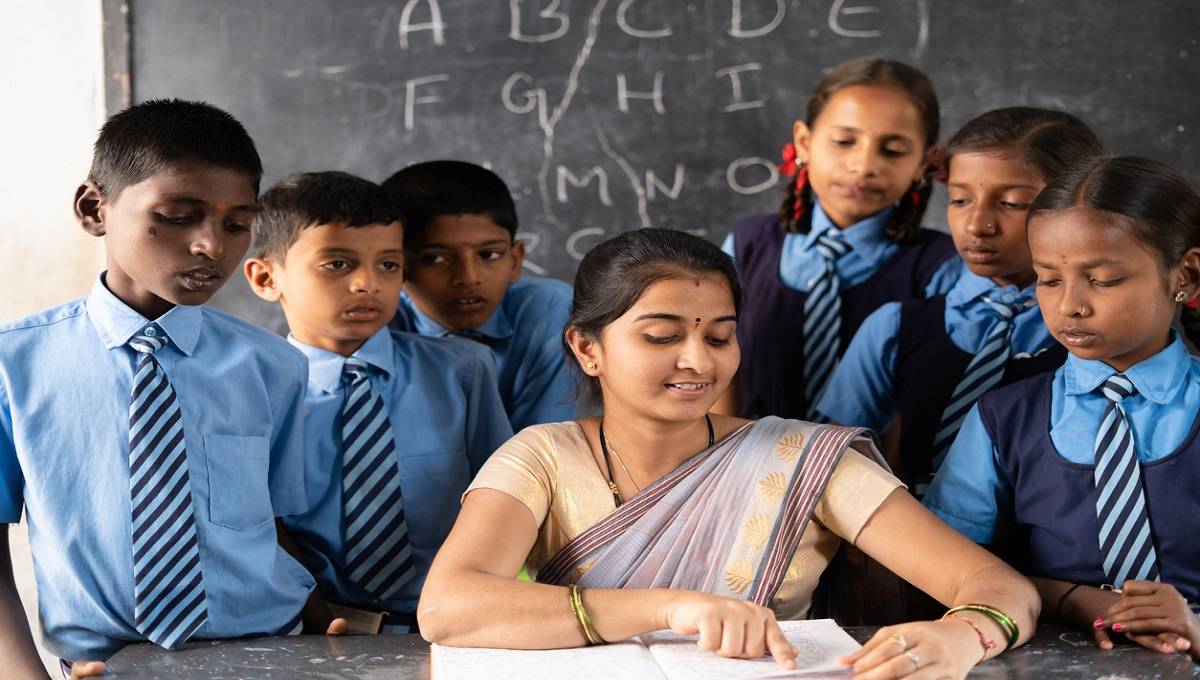
When Ramesh’s relatives heard he was preparing for a teaching career, the reactions were mixed. Some nodded approvingly — “Teaching is respectable.” Others asked quietly, “But what about income?” In India, teaching has always carried dignity, but it has also lived under a cloud of assumptions about money, growth, and ambition. In 2025, that cloud hasn’t fully disappeared, but the reality beneath it has changed more than most people realize.
Teaching in India today is no longer a single, predictable path. It is a wide landscape — from government schools in small towns to international schools in metros, from online tutoring platforms to coaching institutes, from college classrooms to edtech startups. Whether teaching is a stable job or a growth-oriented career depends largely on how one navigates this landscape.
Qualifications: the first gate, not the final measure
For many aspiring teachers in India, qualifications feel like a maze of degrees, exams, and eligibility rules. At the school level, paths are fairly defined. Primary and upper-primary teachers usually need a D.El.Ed or B.El.Ed, while secondary and senior secondary teachers typically require a B.Ed along with subject-specific graduation or post-graduation.
For government school jobs, clearing eligibility exams like CTET or state TETs is essential. These exams are competitive, and preparation can take years. Many candidates treat them like civil service exams — studying intensely while juggling financial pressure and uncertainty.
At the college level, the requirements shift. A master’s degree becomes mandatory, often followed by NET or SET qualification. For those aiming at universities and long-term academic careers, a PhD is increasingly important, especially in reputed institutions.
But here’s what many young graduates don’t realize early enough: qualifications help you enter teaching, but they don’t guarantee success or satisfaction. Once inside the system, performance, adaptability, and reputation matter far more than certificates alone.
Salary: the truth behind the numbers
Salary is where myths dominate conversations about teaching in India.
Government teaching jobs are often seen as the gold standard. The pay scales are transparent, revised periodically through pay commissions, and come with allowances, pensions, and job security. A government school teacher may not start rich, but over time, the financial stability is undeniable. This predictability is what attracts thousands of applicants every year.
Private school salaries, however, vary wildly. A teacher in a small private school in a semi-urban area may earn modestly, sometimes unfairly low. Meanwhile, teachers in well-established private or international schools in cities like Delhi, Bengaluru, or Mumbai can earn salaries comparable to corporate professionals.
Then there is the growing online education space. Tutors, course creators, and subject experts now earn through multiple streams — recorded courses, live classes, doubt-solving sessions, and content creation. For skilled teachers, income is no longer capped by a fixed pay scale.
In short, teaching in India does not guarantee high income — but it no longer guarantees low income either. The difference lies in positioning and skill.
Workload and expectations: the unseen side of the job
From the outside, teaching may still look like a job with long vacations and short working hours. Teachers know better.
In schools, the work extends far beyond classroom hours. Lesson planning, evaluation, parent meetings, administrative duties, and extracurricular responsibilities are constant. Government teachers often face additional non-academic duties like election work or surveys, while private school teachers may face pressure related to results, inspections, and parent satisfaction.
College teachers enjoy more autonomy but face pressure to publish research, meet accreditation standards, and handle large student batches. Coaching institute teachers deal with performance metrics tied directly to results.
Teaching in India today is emotionally demanding. Teachers are expected to manage diverse classrooms, varied learning levels, and increasing parental expectations — often with limited resources.
Those who survive long-term are not necessarily the most intelligent, but the most resilient.
Respect has evolved, not disappeared
It’s common to hear that teachers no longer receive the respect they once did. The reality is more nuanced.
Earlier, respect was automatic. Today, it is performance-based. Students question more. Parents ask more. Institutions expect measurable outcomes. While this can feel uncomfortable, it has also raised professional standards.
Teachers who communicate clearly, update their skills, and show genuine commitment are still deeply respected — often more so than before. The role has shifted from unquestioned authority to trusted guide.
This shift has been difficult for some, but empowering for others.
Career growth: more paths than ever before
One of the biggest misconceptions about teaching in India is that growth is limited. In reality, growth paths have multiplied.
Within schools, teachers move into roles like senior teacher, academic coordinator, vice principal, and principal. In colleges, growth includes promotions, research leadership, and administrative roles.
Beyond institutions, teachers transition into curriculum design, academic writing, teacher training, educational consulting, and edtech roles. Some build strong personal brands through YouTube, online courses, or test preparation platforms.
Teaching is no longer a closed profession. Skills gained in the classroom — communication, explanation, mentoring — transfer well into many education-related careers.
Government vs private: stability versus flexibility
Government teaching jobs in India offer unmatched job security. Transfers, pensions, and fixed working conditions appeal to those who value long-term stability. However, entry is difficult, and growth can feel slow.
Private teaching jobs offer faster entry and more flexibility but less security. Performance pressure is higher, but so is the possibility of faster growth — especially in reputed institutions.
Many teachers move between these systems during their careers. The choice is not permanent, even though it often feels that way at the start.
Is teaching still a good career choice in India?
Teaching in India is not an easy career. It demands patience, continuous learning, and emotional strength. It is not ideal for those looking for quick money or minimal responsibility.
But for those who see teaching as a long-term profession — and are willing to adapt, upskill, and explore new formats — it can be stable, meaningful, and surprisingly versatile.
Ramesh, who once faced skeptical questions, now teaches in a hybrid role — part-time at a college, part-time online. He earns decently, feels respected, and knows his skills are transferable. His career doesn’t fit old definitions of teaching — and that’s exactly why it works.
Teaching in India today is not about following a single path. It’s about choosing wisely, staying flexible, and understanding that growth comes not just from the system, but from how you navigate it.
